Perimeter control around Norfolk jobs changes with wind exposure, soft subgrades, and mixed waterfront traffic. The layout and site-stability planning plan depend on whether the line sits on slab, fill, or a storm-prone frontage.
Begin with the boundary purpose—security, crowd routing, fall protection zones, or equipment separation—then map wind exposure and soil conditions. Coastal gusts and silty ground often dictate panel style, footing size, and site-stability factors type.
Define the purpose and traffic mix
Security lines for industrial sites need limited crossing points and clear sightlines.
Crowd routing near public interfaces must anticipate detours around lighting cables, containers, and lift lanes.
Equipment separation is common where /rough-terrain-scissor-lift-rental/ and /telehandler-rental/ share access with delivery trucks.
Surface and site-stability planning reality
Paved aprons simplify base placement, but transitions to fill can leave gaps under panels. Expect shim and site-stability factors needs on uneven ground.
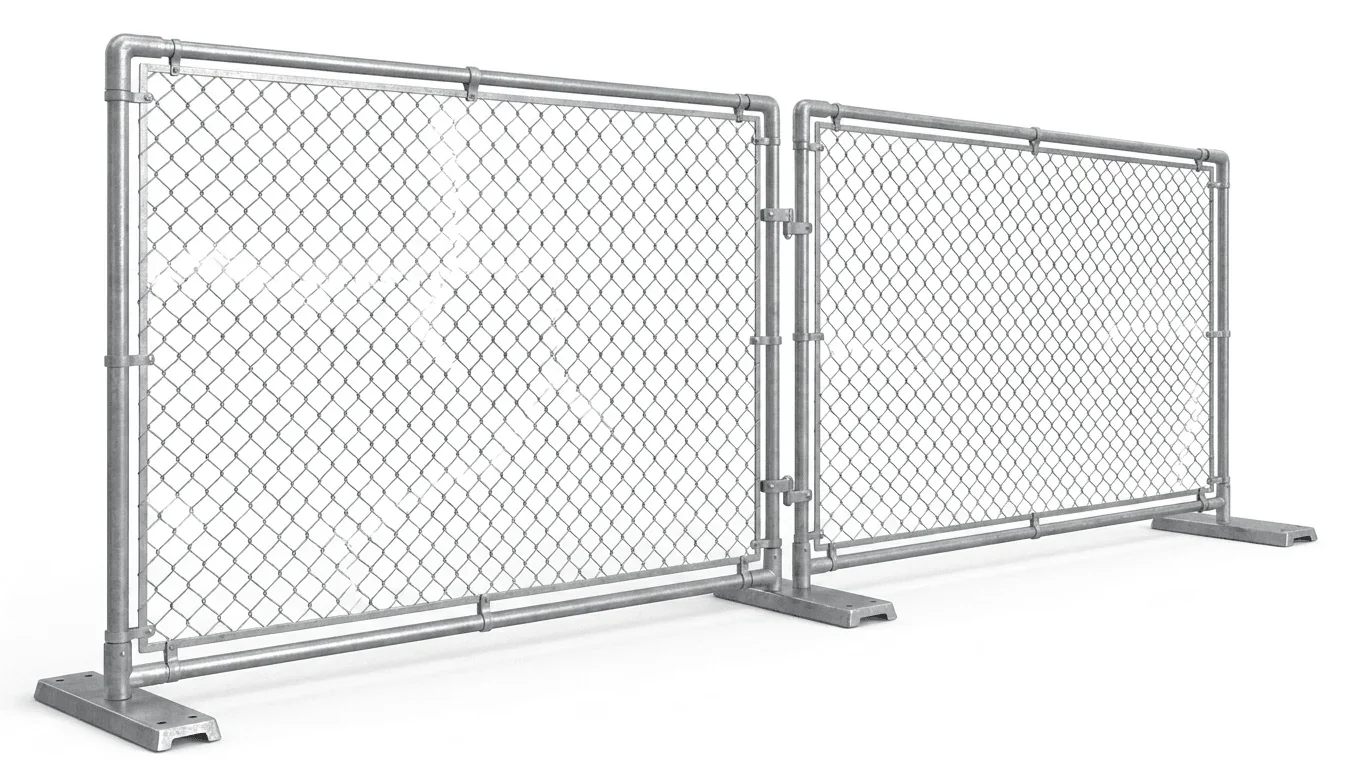
Soft, silty soils reduce wedge anchor reliability. Freestanding bases with added site-stability factors are common where excavation is restricted.
Waterfront wind exposure raises overturn risk. The selected system’s instructions and the site plan govern site-stability factors amounts and tie-down methods.
Line geometry and sighting
Corners and gates collect wind load; plan heavier bases there.
Keep fencing offsets from water edges, excavation, and overhead work zones. If boom or mast lifts operate overhead, mark controlled access points and lighting. See /aerial-lift-rental/ and /generators-light-towers-rental/.
Storm-readiness and maintenance
Norfolk’s coastal weather can change quickly. Establish staging areas to stack panels if the site plan calls for temporary removal before storms.
Salt air can affect hardware. Regular checks of couplers and feet reduce unexpected shifts along high-traffic runs.
Measurements and layout notes to prepare
Total linear feet, number and width of gates, and any turnstiles or barrier transitions.
Surface types along the route, expected wind exposure, and no-drill zones above utilities.
Adjacent equipment zones, especially near /boom-lift-rental/ or /forklift-rental/ routes.
Equipment questions
Questions about Norfolk planning
How does coastal wind change temporary fence planning in Norfolk?
Open areas near the water expose panels to higher gusts. The system’s instructions and the site plan determine site-stability factors or site-stability planning needs, often increasing weights at corners and gates where loads concentrate.
What if staking into the ground isn’t allowed?
Use freestanding bases with site-stability factors sized to the expected exposure and surface. On soft or utility-rich ground, weighted bases avoid excavation while maintaining line stability per the project plan.
How close can fencing run to equipment work zones?
Maintain offsets that keep gates, bases, and braces out of lift paths and fork swing areas. Final clearances follow the site layout and the types of machines operating nearby.