Power and job lighting in Norfolk often sit on windward waterfronts, paved yards that turn slick, or soft shoulder areas near utility runs. The site layout and the regional climate decide the footprint, fuel, and mast plan long before the first cord is laid.
Start with the power draw and target illumination, then measure where the equipment will sit. In Norfolk, salt air, gusts off the water, and slab-to-dirt transitions narrow the choice between portable generators, towable units, and light towers with appropriate stabilizing hardware.
Define the load and duty cycle first
List continuous and peak loads. Long night shifts on marine or infrastructure work call for a generator sized for steady draw plus start-up headroom.
Check noise sensitivity near mixed-use waterfront areas. Acoustic enclosures may matter around residences or offices.
Confirm runtime windows between refueling. Towable tanks suit overnight lighting on extended shifts.
Where can the unit live?
Hardstand vs. shoulder: Many Norfolk sites transition from concrete aprons to silty fill. If the pad is not fully paved, select gear with wider stance and ground-friendly tires.
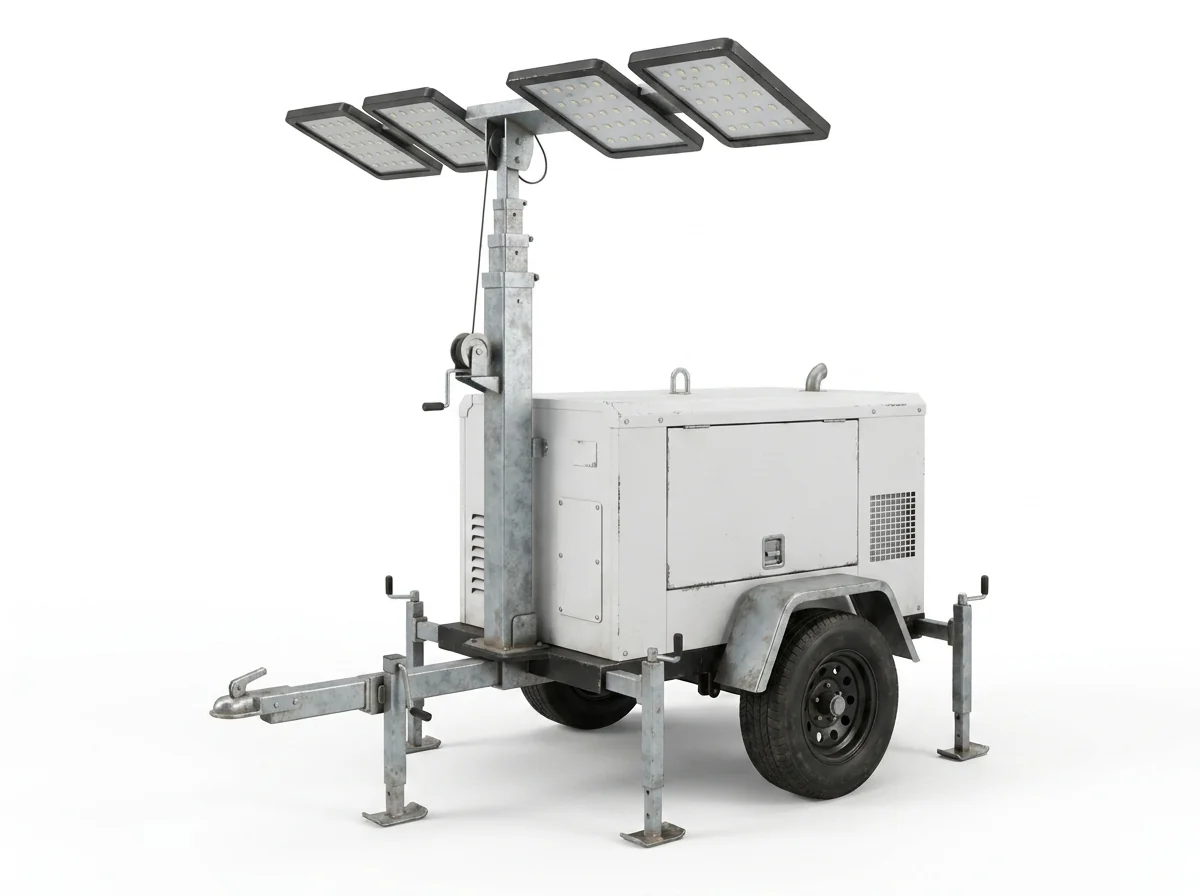
Route in: Measure gate widths and turning radii in older industrial blocks. Towable light towers need clear swing space for delivery and retrieval.
Clearance: Mast height only helps if it clears staging, racks, and rigging paths without creating glare into work zones or waterways.
Wind and salt considerations
Wind exposure affects mast selection and site-stability planning approach. Waterfront gusts can limit deployed height or require heavier bases. Actual limits follow the unit’s instructions and site procedures.
Corrosion resistance matters. Galvanized or coated components and weatherproof connectors reduce downtime in high-salinity air.
Cable management: Elevated runs, ramps, and hose bridges prevent damage where forklifts and telehandlers cross. See /forklift-rental/ or /telehandler-rental/ if material movement shares lanes with cables.
Lighting geometry that reduces shadows
Tall masts set back from the task help fill vertical faces on ship structures, bridge forms, and warehouses.
Multiple smaller towers placed around the perimeter can cut glare for equipment operators using /boom-lift-rental/ or /aerial-lift-rental/ at height.
Fuel type and emissions profile
Diesel towables cover heavy overnight lighting and pump loads.
Smaller inverter units suit punch lists inside local distribution buildings when combined with /electric-scissor-lift-rental/ work.
Exhaust routing and ventilation are critical indoors. For enclosed tasks, the site’s safety plan governs placement and permissible runtime.
Access, security, and storm-readiness
Coastal storms can arrive quickly. Plan tie-down areas, cable pick-up points, and protected parking for towers when masts are lowered.
For perimeters near public rights-of-way, pair light towers with /temporary-fencing-barricades-rental/ to manage boundary lines and protect cabling.
When lighting supports elevated work
If crews are on articulating or telescopic booms, confirm light placement avoids blinding operators and signalers. Reference /articulating-boom-lift-rental/ and /telescopic-boom-lift-rental/ when mapping beam angles versus expected basket positions.
Summary measurements to have ready
Total kW and peak surge, target lux/foot-candle at task, minimum runtime between refuels.
Pad type, bearing capacity indications, and route constraints.
Expected wind exposure category and salt-air proximity.
Equipment questions
Questions about Norfolk planning
How does Norfolk’s salt air change generator and light tower selection?
High salinity accelerates corrosion on frames, fasteners, and electrical connections. Units with coated or galvanized components and weather-rated connectors typically hold up better on waterfront and dock-adjacent sites, reducing maintenance interruptions.
What wind information matters for light towers near the water?
Know the site’s typical gust exposure and shielding. The selected unit’s instructions specify deployed wind limits and site-stability factors requirements. Waterfront gusts may require reduced mast height or heavier bases per the site plan.
What if the site transitions from slab to soft fill?
Expect silty or soft soils where paving ends. Choose equipment with wider stance, appropriate tires, and enough room for safe positioning. Verify bearing conditions at the parking spot and along the tow route before finalizing placement.