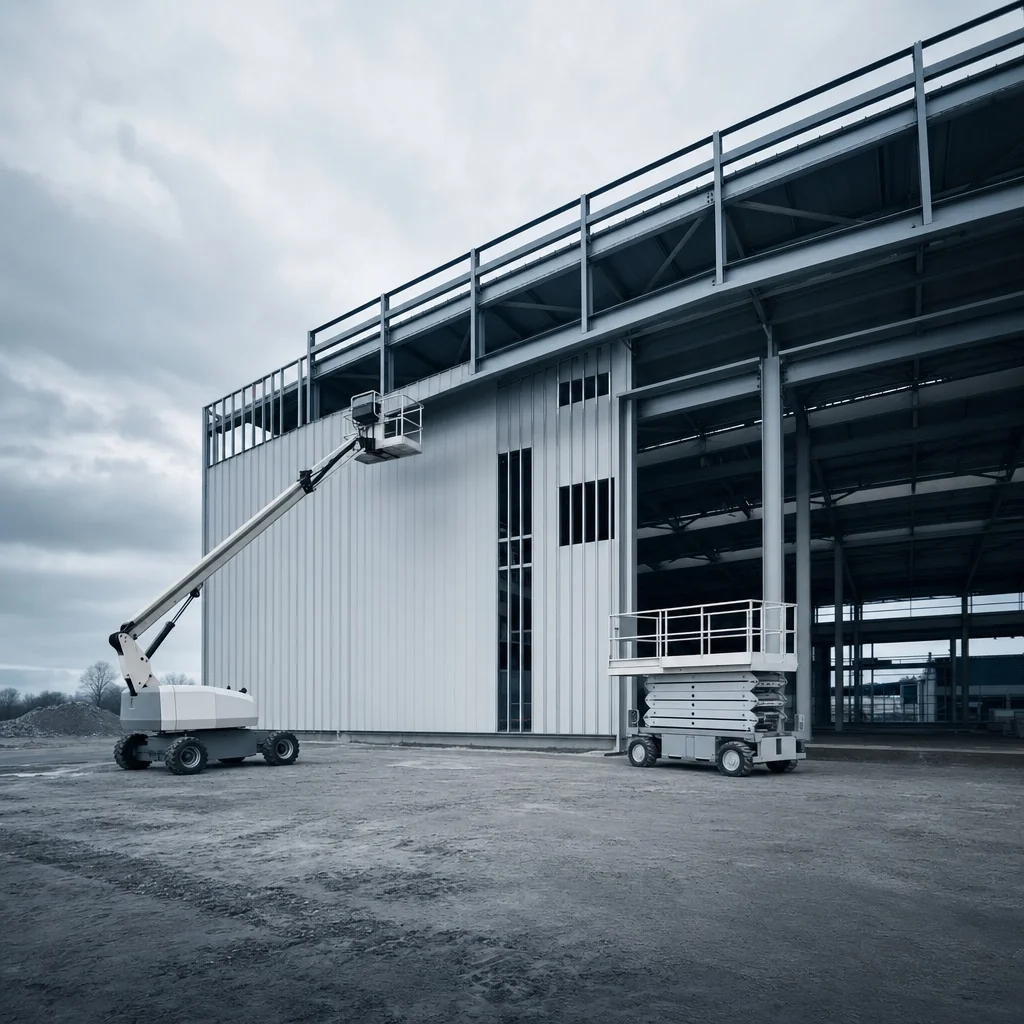
Frame the job: can the lift sit directly under the task?
Scissor lifts work best when the machine can park under the work zone and go straight up. If obstacles block a straight vertical path—or if outreach over equipment or piping is required—compare boom options at /boom-lift-rental/ or broader choices at /aerial-lift-rental/.
- Direct-under tasks on smooth slab: look at /electric-scissor-lift-rental/ for compact units suited to warehouses and commercial corridors.
- Outdoor work with broken pavement, aggregate, or transitions to compacted soil: /rough-terrain-scissor-lift-rental/ addresses stability, grade, and tire types.
How Norfolk conditions change the decision
- Coastal humidity and salt exposure: corrosion resistance and diligent inspection cycles matter for exterior projects near the water.
- Wind and open exposures: elevated platforms outdoors are limited by the selected model’s wind rating and site procedures; indoor-only slab lifts are not intended for exposed use.
- Soft or silty ground near low-lying areas: expect deflection at slab edges and parking lot repairs; larger tires and stabilizing features on rough‑terrain models become relevant.
Measurements that narrow the category
- Required platform height and working clearance above: verify ceiling truss depth, sprinklers, and conduit.
- Floor loading and doorway size: compact electrics fit tighter aisles and standard doors; wider deck rough‑terrain units need truck‑sized access.
- Platform capacity for people, tools, and materials: heavier material handling may push you up a size class.
Typical Norfolk use cases
- Interior inventory work and facility maintenance in local distribution buildings: electric slab scissors for tight turning and low noise.
- Waterfront maintenance and heavy civil work zones: rough‑terrain scissors with higher ground clearance for uneven approaches and outdoor exposure.
When a scissor isn’t the fit
If the machine cannot sit below the work or the task is on a curved facade or over obstacles, consider articulating booms at /boom-lift-rental/ or /aerial-lift-rental/.
Related options
- Need outreach or up-and-over access: /boom-lift-rental/
- Strict indoor work on smooth floors: /electric-scissor-lift-rental/
- Unfinished outdoor sites: /rough-terrain-scissor-lift-rental/