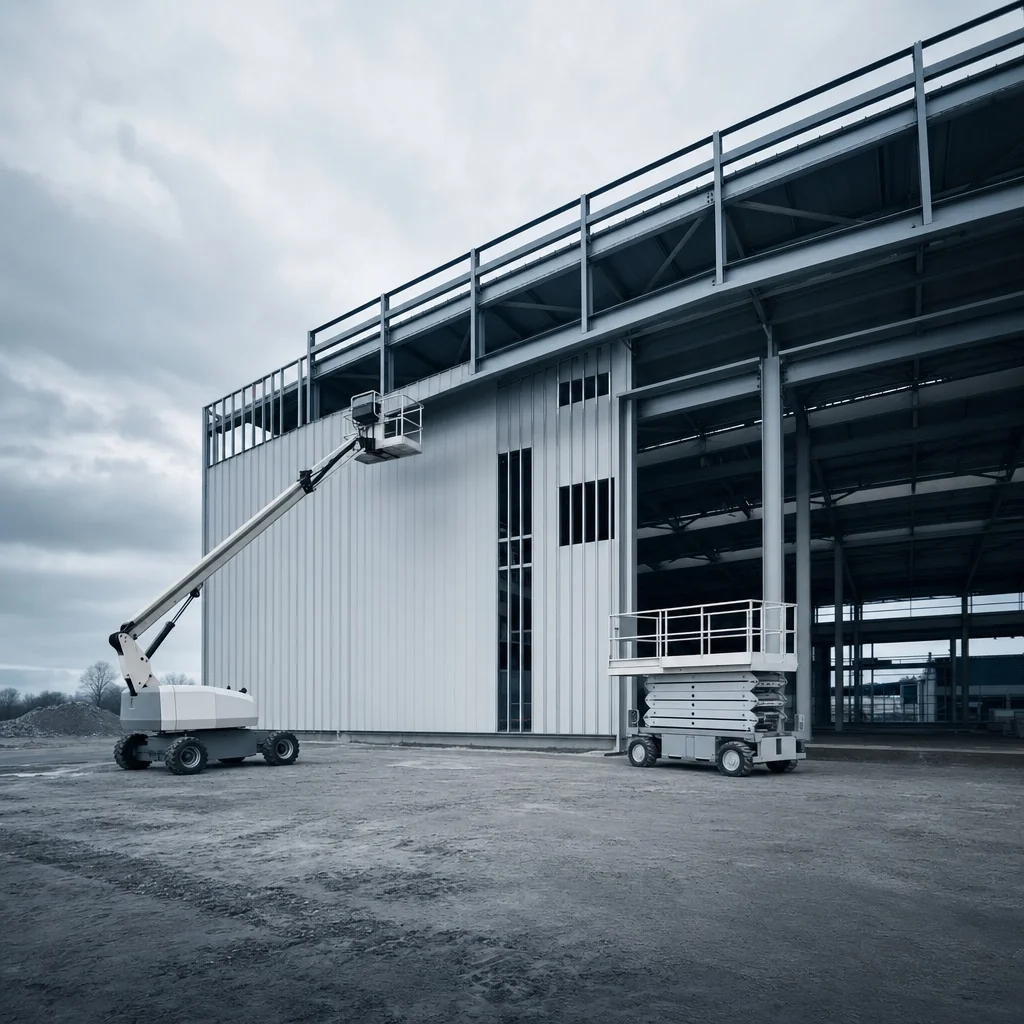
Scissor and vertical access by surface and height
- Electric scissor lifts: Best on smooth interior slabs for racking, MEP, and fit-out in local distribution buildings. Low noise and zero-emission operation indoors. Start at /electric-scissor-lift-rental/.
- Rough-terrain scissor lifts: Wider stance and lug tires for uneven yards and slab-to-dirt transitions common around industrial sites. See /rough-terrain-scissor-lift-rental/.
- Vertical mast lifts: Compact footprint for tight aisles and mezzanine work with minimal floor loading. Visit /vertical-mast-lift-rental/.
Boom lifts for outreach and complex geometry
- Articulating booms: Navigate around obstacles and under overhangs found on ship structures and bridge forms. See /articulating-boom-lift-rental/.
- Telescopic booms: Direct horizontal reach for façade and infrastructure spans where clear approach lines exist. See /telescopic-boom-lift-rental/.
- For general comparisons across platforms, start at /aerial-lift-rental/ or /boom-lift-rental/.
Material handling around mixed pads and soft soils
- Telehandlers: Staging pipe, forms, and palletized loads where forklifts can’t travel, especially across compacted fill. See /telehandler-rental/.
- Forklifts: Interior and yard handling where the surface is known and stable. See /forklift-rental/.
Site products that fit coastal conditions
- Generators and light towers: Sized for overnight waterfront work with wind-aware mast planning and corrosion-resistant components. Visit /generators-light-towers-rental/.
- Storage containers: Pick coatings and seals that tolerate salt air; verify base stability on silty soils. See /storage-containers-rental/.
- Temporary fencing and barricades: site-stability factors and layout must account for gusts and no-drill zones over utilities. See /temporary-fencing-barricades-rental/.
Norfolk-specific planning factors
- Wind and weather: Waterfront gusts can affect elevated work limits. Actual site conditions, equipment instructions, and procedures govern.
- Surface transitions: Low elevation and a high water table often leave soft zones near the edges of paving; choose machines with the stance and tires to match.
- Access patterns: Older industrial corridors and shared maritime yards can tighten turning space and delivery windows; map routes early.
What to measure before comparing categories
- Working height and lateral reach; whether the machine can sit below the task.
- Load at height and attachment clearances; doorways, gates, and overhead conflicts along the route.
- Ground conditions at the work zone and staging areas; expected wind exposure and proximity to salt air.
For background on the company and how to reach us, visit /about/ and /contact/.